
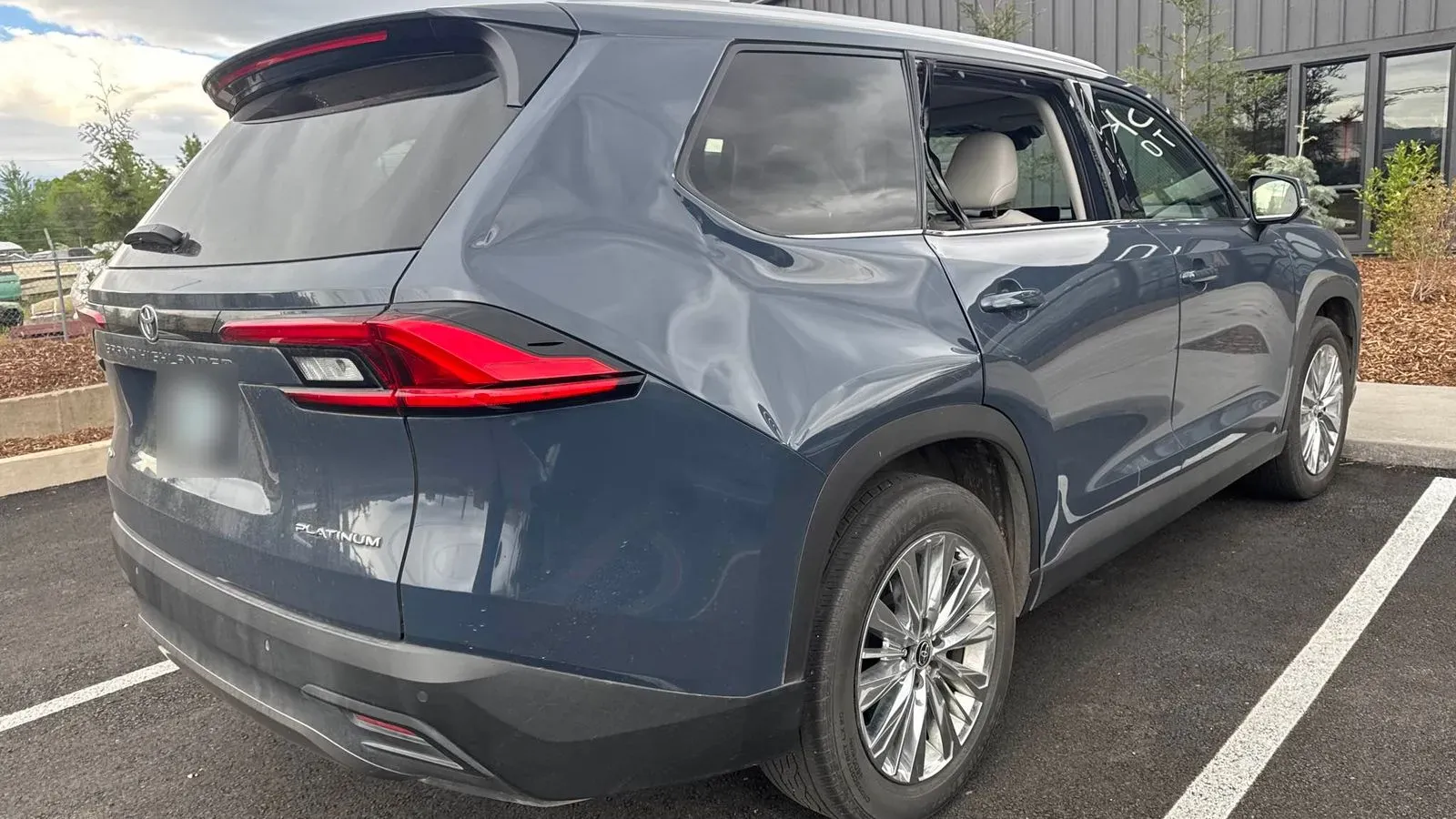
Twenty years ago, a parking lot bump to the front of your car usually meant a new bumper cover, some paint, and a few hours of labor. Today that same bumper can hide a radar unit, a row of parking sensors, and mounting brackets that have to sit at exact angles so the car's safety systems can see the road. The dent looks the same. The repair isn't.
That gap is a big part of why cars get totaled so much easier now. In 2025, 23.1% of auto claims ended in a total loss, a record for the second year in a row. That's close to one claim in four. Back in 2006 the rate was 16.1%, and by 2015 it was 18.8%, according to an insurer presentation to a U.S. Treasury advisory committee.
If your insurer just called your car a total loss, or you're worried they're about to, here's what's behind it and what you can do about it.
Why More Cars Get Totaled: The Cost Gap in Plain Numbers
The easy guess is that parts got expensive. They didn't, much. Government price data shows what manufacturers charge for vehicle parts is up about 15% since 2019, and just 4.4% from 2022 through 2025. Since 2019, what people pay for body work is up about 42%. The table further down puts the exact numbers side by side.
So the parts didn't jump much. The bill did. The difference is everything around the parts: the hours it takes to take a modern car apart and put it back together to factory procedures, the scans and calibrations, and the structural steel that has to be replaced instead of straightened.
The Other Half of the Math: What Your Car Is Worth
A car gets totaled when the repair costs too much compared with what the car was worth right before the wreck. Repair cost is only half of that equation.
Used vehicle prices rose 51.1% between December 2019 and their peak in December 2021, then slid back down. By December 2025 they sat about 11.5% below that peak. Repair prices kept climbing the whole time.
The cars on the road also keep getting older. The average light vehicle in the U.S. was a record 12.8 years old in 2025. Passenger cars averaged 14.5 years and light trucks 11.9. An older car is worth less, so a smaller repair bill is enough to cross the line. In 2024, more than 70% of total loss valuations were for vehicles seven years or older.
Here's the squeeze in one table:
| What changed | How much | Time period |
|---|---|---|
| Price of manufacturing vehicle parts | Up 15.3% | Dec 2019 to Dec 2025 |
| Price of manufacturing vehicle parts, recent years | Up 4.4% | 2022 to 2025 |
| Consumer price of motor vehicle body work | Up 41.7% | Dec 2019 to Jul 2026 |
| All consumer prices, same BLS data | Up 26.1% | About the same period |
| Used car and truck values | About 11.5% below their peak | Dec 2021 peak to Dec 2025 |
| Claims that end in a total loss | 23.1%, a record | 2025 |
Repair cost goes up. Value goes down. When the two meet, the car is totaled. If you drive a ten-year-old truck that you've kept in good shape, this is why a crash that looks moderate can still end with a total loss call.
Sensors Behind the Bumper, the Mirror, and the Windshield
The biggest new line on repair estimates is calibration for advanced driver assistance systems, or ADAS. That's the radar, cameras, and sensors behind automatic emergency braking, lane keeping, blind spot warnings, and adaptive cruise control.
In 2025, 28.3% of repairable estimates included ADAS calibration, up from 21.8% the year before. A second national estimating database found the share of estimates with a calibration line grew 31.4% that year, and calibration averaged $688 per estimate when it showed up.
These parts sit right where cars get hit. AAA counted the ultrasonic parking sensors on 2023 test vehicles and found 8 on a Toyota Camry, 10 on a Ford F-150, and up to 12 on a Nissan Rogue. The F-150 also carries two separate front radar sensors.
The money adds up fast. When AAA priced out common repairs line by line, ADAS parts averaged 37.6% of the total repair cost. On a side mirror replacement, the ADAS components came to $1,067.42 of a $1,507.55 bill. That's about 70% of a mirror repair going to the electronics inside it.
Glass tells the same story. A simple windshield replacement can cost as little as $250, but vehicles with front crash prevention were far more likely to have glass claims of $1,000 or more. A camera looks through that glass, and it has to be aimed again after the glass is replaced.
If you drive a newer Toyota, a front-end hit can mean sensor work on top of the body work. We go through what that looks like on our Toyota collision repair page.
It's also why a shop usually can't save you money with a used sensor. General Motors, for example, requires "only new GM Genuine ADAS components" in collision repairs and rules out salvaged, recycled, remanufactured, and aftermarket radars, cameras, and sensors.
These Systems Work, So the Repair Has to Be Right
None of this is an argument against the technology. Insurance claim data shows front automatic emergency braking cut property damage liability claims by 14.4% and bodily injury claims by 23.6%. A federal rule requires automatic emergency braking on all light vehicles by September 1, 2029, so every new car sold after that will have the hardware.
The systems are worth having. The cost of that safety shows up when the car needs repair.
Cars Still Have Plenty of Metal. The Metal Changed.
People like to say cars went from metal to plastic. Plastic did grow, from under 20 pounds per vehicle in 1960 to 351 pounds in 2018. Plastic now takes up about half the volume of a new light vehicle but less than 10% of its weight. The structure that protects you in a crash is still mostly metal. What changed is the kind of metal.
In 1975, the average vehicle was 61% steel by weight, and 56% of the vehicle was plain mild steel. Only 4% was medium or high-strength steel. By 2007, total steel had barely moved (57%), but mild steel had dropped to 43% and the stronger steels had tripled to 12%.
Mild steel is forgiving. You can heat it, pull it, and work it back into shape. The newer steels don't work that way. Ford's 2016 steel repair chart lists 27 different steel grades, each with its own repair rules. The mild grades can be heated to a maximum of 1,200°F for 90 seconds, and only twice. Boron, martensitic, and several dual-phase steels can't be heated at all. They have to be replaced at factory joints.
Other manufacturers say the same thing. GM's repair guide for ultra high-strength steel says heat is not recommended and that the steel "should be replaced only, at factory joints." Stellantis goes further. If heat is used to straighten its structural high-strength steels, "the component must be replaced."
There's a physical reason for these rules. Oak Ridge National Laboratory found that the heat from welding boron press-hardened steel cuts the hardness of the metal around the weld by 40% to 50%. Heat does the same kind of damage when someone tries to straighten these steels, which is why the manufacturers say to replace them. A rail that looks straight after a hot pull may not crush the way it was designed to in the next crash.
More Ways to Hold a Car Together
Joining the metal got more complicated too. A modern passenger car has roughly 4,000 to 5,000 spot welds. The Center for Automotive Research counts 25 joining methods in current use, including several kinds of welding, rivets, threaded fasteners, and structural adhesives. A proper repair uses the method the manufacturer specifies for that exact spot, not whatever the shop has on hand.
Aluminum adds another layer. When Ford redesigned the F-150 for 2015, 1,102 pounds of steel body structure and closures were replaced with 632 pounds of aluminum, according to an industry study funded by the Aluminum Association and filed in a federal NHTSA docket. Aluminum repair needs its own tools and its own procedures, kept separate from steel work.
All of this costs labor hours. Panels come off to reach factory joints. Parts get sectioned or replaced instead of straightened. Every step follows the manufacturer's procedure. That labor is the part of the bill that grew.
How Body Repair Got Here
The first car bodies, built between 1896 and 1910, were made almost entirely of wood, and the all-steel body shell got its real start in 1927, once stamping presses could turn out more complex panels. Then came the unibody, where the body and frame are one welded structure. Most historians credit the 1922 Lancia Lambda as the first unibody design, and the 1941 Nash 600 claims to be the first American one. Crumple zones, developed by a Mercedes-Benz engineer in the 1950s, let the front and rear of the car crush on purpose so the cabin doesn't. Frontal air bags became mandatory on all passenger cars built after 1998. Each step made cars safer to crash in and harder to fix.
Why Not Every Shop Can Keep Up
All this complexity landed on an industry that's short on skilled people. The Bureau of Labor Statistics says body repairers "generally need 2 or 3 years of hands-on training to become fully independent." That's before anyone learns a new model year's procedures.
In a 2025 University of North Florida survey of 304 collision shops, 65% sent calibration out entirely. Sending calibration to a specialist is normal. When a repair calls for it, we coordinate it with our calibration partner and put it on the estimate so it doesn't get skipped.
We repair to manufacturer specifications. That's the standard a modern car needs. A two-year-old SUV needs it. So does a work truck with 200,000 miles on it.
What This Means for You After a Crash
You can't change the math on steel prices or used car values. You can make sure your car gets an honest estimate and a correct repair, and that you understand the numbers if a total loss comes up.
Get an Estimate That Looks Past the Bumper Cover
A quick walk-around can miss what's behind the bumper cover: brackets, sensors, energy absorbers, and structure. A good estimate notes likely hidden damage up front. Once the car is torn down for repair, the rest shows up. When it does, the shop files a supplement with your insurance and gets approval before the work continues. That's normal. Being surprised at pickup isn't.
Ask About Scans and Calibration
Ask whether the estimate includes pre-repair and post-repair scans, plus any calibration the manufacturer calls for. If your car has lane keeping, blind spot warnings, or automatic braking and the estimate says nothing about calibration, ask why.
This matters more than most people think. In an IIHS survey of more than 3,000 vehicle owners, about half reported problems with their crash-avoidance systems after repairs, and nearly three-quarters of those repaired after crash damage had issues.
When you pick the car up, ask for the paperwork that shows the scans and calibration were completed. Keep it with your repair records. If a warning light comes on later, or the lane keeping acts strange on the highway, that paperwork makes it easy for the shop to check what was done and fix it.
You Choose the Shop
Your insurance company may suggest a shop. In Oregon, the choice is yours, and your insurer can't require you to use a particular shop. When you come in for a free estimate, we handle the claim, the supplements, and the billing from there.
If Your Insurer Says It's Totaled
Your insurer bases a total loss payout on what your car was worth right before the crash. If the number seems low, ask how they figured it and which comparable vehicles they used. It's a fair question, and a good adjuster will walk you through it. Getting your own repair estimate helps too, so you know the real repair number instead of guessing.
We know a total loss call can sting, especially on a car that's paid off and runs well. For a lot of families, a vehicle is the second or third biggest thing they own, and the check doesn't always feel like it covers what you lost. Knowing how the math works won't change the outcome every time, but it puts you in a better spot to ask the right questions before you sign anything.
Questions to Ask Any Body Shop
- Will you follow the manufacturer's repair procedures for my vehicle?
- Does the estimate include scans before and after the repair?
- Who does the calibration, and will I get proof that it was done?
- What parts are you using, and why?
- What warranty comes with the body and paint work?
- How will you keep me updated if you find hidden damage?
At Sky Auto Body, we use OE parts on nearly every job, we back body and paint work with a limited lifetime warranty, and we'll call you before the scope of the repair changes. Read more about how we handle a full collision repair.
Walk In for a Free Estimate
If you've been in a wreck, or your insurer is already talking about a total loss, bring the car to 1385 Sage Rd in south Medford. Walk in any weekday between 8am and 5pm, no appointment needed, and we'll write your free estimate while you wait. We'll walk you around the car and show you what's damaged and what it takes to fix it.
Rather call first? Reach us at 541-500-0318, or send us your details and we'll get back to you.
Sources
- CCC Intelligent Solutions, Crash Course 2026: Complexity Compounds, 2026
- CCC Intelligent Solutions, Crash Course Report: Forces Reshaping the U.S. Vehicle Fleet, 2025
- U.S. Treasury Federal Advisory Committee on Insurance, Emerging Cost Drivers in Auto Insurance (insurer presentation), 2016
- U.S. Bureau of Labor Statistics, Recent Price Trends in the Motor Vehicle Parts Industry, 2026
- U.S. Bureau of Labor Statistics, CPI: Motor Vehicle Body Work (CUUR0000SETD01), 2026
- U.S. Bureau of Labor Statistics, CPI: Used Cars and Trucks (CUUR0000SETA02), 2026
- S&P Global Mobility, U.S. Vehicle Age Rises Again to 12.8 Years in 2025, 2025
- Enlyte / Mitchell, Auto Physical Damage: Navigating Complexity in Collision Claims, 2026
- AAA, The Cost of Advanced Driver Assistance Systems (ADAS) Repairs, 2023
- IIHS, Crash avoidance features improve safety but complicate repairs, 2023
- Highway Loss Data Institute, Compendium of HLDI Collision Avoidance Research, Bulletin Vol. 40, No. 4, 2023
- NHTSA, FMVSS No. 127 Automatic Emergency Braking Systems for Light Vehicles, Final Rule, 2024
- General Motors, Advanced Driver Assistance Systems Considerations Position Statement, 2026
- American Chemistry Council, Plastics and Polymer Composites in Light Vehicles, 2019
- Steel Market Development Institute, AHSS 101: The Evolving Use of Advanced High-Strength Steels for Automotive Applications, 2011
- Ford Motor Company / I-CAR, Ford Steel Grade and Repair Method Chart, 2016
- General Motors, Ultra High Strength Steel Repair Guide, undated
- FCA US LLC (Stellantis), Position Statement: Use of Heat, 2025
- Oak Ridge National Laboratory, Advanced High-Strength Steel: Basics and Applications in the Automotive Industry, 2021
- Center for Automotive Research, Technology Roadmap: Materials and Manufacturing, 2019
- Ducker Worldwide (Aluminum Association-funded), Advancing Growth: Metallic Material Trends in the North American Light Vehicle, NHTSA docket 2021-0053, 2021
- The History, Development and Construction of the Car Body (Elsevier / Butterworth-Heinemann sample chapter), c. 2005
- Society of Automotive Historians, Automotive History Review No. 64, 2023
- RoSPA / UK Road Safety Observatory, Vehicles: Crash Mitigation, 2017
- NHTSA, Lives Saved Calculations for Seat Belts and Frontal Air Bags (DOT HS 811 206), 2009
- U.S. Bureau of Labor Statistics, Occupational Outlook Handbook: Automotive Body and Glass Repairers, 2025
- University of North Florida (Zhang and Wang), Skilled Labor Shortage in Auto Collision Industry Poses Motorist Safety Risk, 2025